

EU healthcare spending reaches 10% of GDP, amounting to €1.72 trillion in 2023
Healthcare expenditure in the European Union reached 10% of GDP in 2023, according to newly released Eurostat figures. This confirms healthcare as one of the largest areas of public and private spending across the EU, reflecting both post-pandemic pressures and longer-term trends linked to ageing populations, workforce shortages, and rising demand for care.
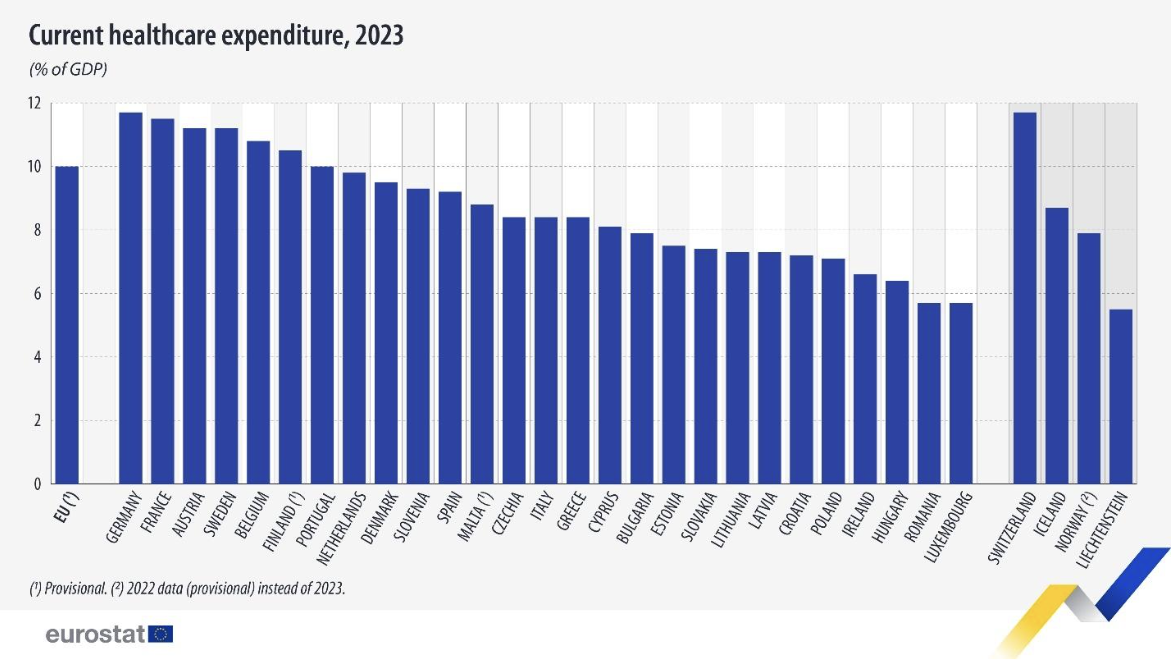
The data show wide variation between member states. Some countries spend well above the EU average, while others remain significantly below it, pointing to persistent inequalities in health system capacity and access. In per-capita terms, spending differences remain stark, even when adjusted for purchasing power. These gaps raise ongoing concerns about convergence and solidarity within the EU’s health landscape.
At the same time, the figures prompt a deeper question: how effectively is this spending being used? Rising expenditure does not automatically translate into better health outcomes. Many systems continue to struggle with long waiting times, staff burnout, uneven access to services, and limited investment in prevention and early intervention.
The data also come as the EU debates the future shape of its health and innovation policies, including the role of competitiveness, preparedness, and research investment. With healthcare already absorbing a substantial share of economic output, future discussions are likely to focus less on whether Europe spends enough, and more on how spending can be better aligned with population needs, long-term sustainability, and improved outcomes across all areas of care.
