

Interview with EU HTA leader offers insights into Europe’s new Joint Clinical Assessment system
For innovative therapies in Europe, regulatory approval is only part of the journey. Even after receiving a positive opinion from the European Medicines Agency (EMA) and obtaining central marketing authorisation, medicines must still pass through national reimbursement and pricing processes before patients can gain routine access. A key part of these decisions is Health Technology Assessment (HTA)—the process through which countries evaluate the added clinical value of new medicines compared to existing standards of care.
This landscape is currently undergoing one of its most significant reforms in decades. In January 2025, the EU's new HTA Regulation entered into application, introducing a system of Joint Clinical Assessments (JCAs). Under this framework, EU member states work together to produce a single clinical assessment of a medicine’s relative effectiveness and safety. While pricing and reimbursement decisions remain national competences, the goal is to reduce duplication, improve consistency, and make more efficient use of expertise across Europe.
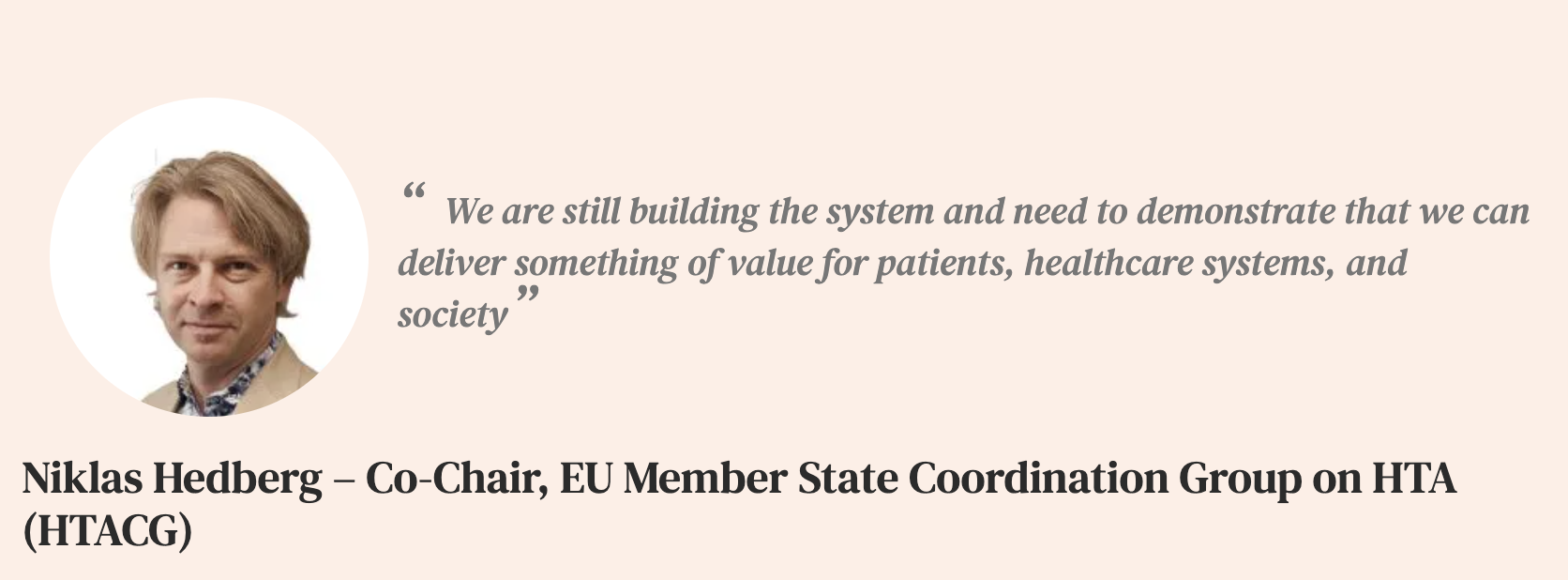
A recent interview with Niklas Hedberg, Co-Chair of the EU Member State Coordination Group on HTA, provides a valuable overview of how the new system is functioning during its first year of implementation.
According to Hedberg, the transition has required a major shift in how member states cooperate. Historically, countries conducted largely separate clinical assessments, often reviewing the same evidence independently. The new framework seeks to create a common scientific foundation that all member states can use while preserving national authority over reimbursement and pricing decisions.
The interview highlights that the first months of implementation have focused heavily on building processes, coordination mechanisms, and trust between participating agencies. Hedberg notes that while the system is still evolving, the objective is to establish JCAs as a high-quality and credible source of evidence that can support decision-making across Europe.
The discussion is particularly relevant for developers of innovative therapies, including emerging mental health treatments. As more complex therapeutic approaches enter development—including interventions that combine medicines with structured psychological support or involve novel treatment paradigms—the way clinical value is assessed will become increasingly important. Evidence requirements, outcome measures, patient-reported outcomes, and comparative effectiveness assessments can all influence whether innovative treatments ultimately reach patients.
Hedberg also stresses that the new framework is intended to be iterative and adaptive. The Coordination Group expects methodologies and procedures to continue evolving as experience accumulates and as stakeholders provide feedback. Building confidence in the system among regulators, HTA bodies, clinicians, patients, and industry will be critical to its long-term success.
For those following European health policy, the interview offers a useful reminder that innovation does not end with regulatory approval. The HTA process increasingly sits at the centre of decisions about which treatments health systems fund, how quickly patients gain access, and how evidence is translated into real-world healthcare delivery. As the EU’s new Joint Clinical Assessment system matures, it is likely to become one of the most influential developments shaping access to innovative medicines across Europe in the coming years.
