

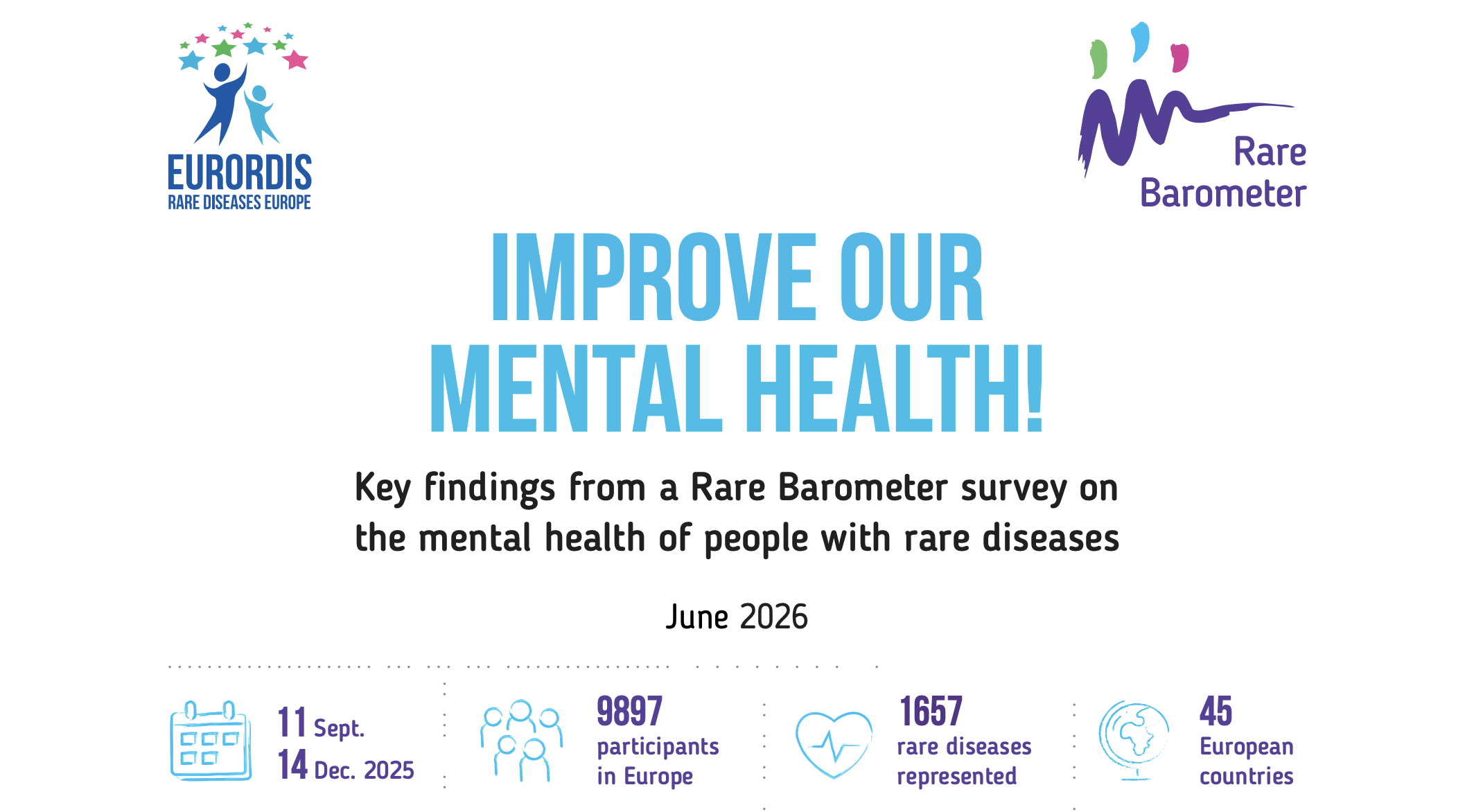
A new Rare Barometer survey by EURORDIS provides a stark picture of the mental health challenges faced by people living with rare diseases and their families. Around 30 million people in Europe live with a rare disease, often facing uncertainty around diagnosis, limited treatment options, physical symptoms, pain, disability, and disruption to daily life. The survey, conducted across 45 European countries with nearly 10,000 participants, shows how strongly these challenges affect emotional well-being.
The findings show that 68% of respondents reported at least one mental health difficulty, including moderate to severe depressive symptoms, clinically significant anxiety, loneliness, or suicidal thoughts in the previous six months. Among people living with a rare disease themselves, 67% reported poor mental health, while among parents of people living with a rare disease, this figure rose to 71%.
The levels of distress reported are high across several indicators. Among all participants, 44% reported moderate to severe depressive symptoms, 42% reported clinically significant anxiety, 45% reported loneliness, and 31% reported suicidal thoughts in the past six months. The survey notes that these figures are several times higher than estimates for the general EU population.
The report also highlights the specific pressures faced during the diagnostic journey. Around half of respondents received no emotional or psychological support while searching for a diagnosis or when the diagnosis was delivered. This matters not only for well-being, but also for engagement with care: the survey suggests that those who received support experienced faster diagnosis.
Beyond diagnosis, unmet needs remain substantial. Most respondents who needed professional support in the past six months did not receive it from centres of expertise, reimbursed mental health professionals, non-reimbursed mental health professionals, or general practitioners and nurses. At the same time, almost half of respondents had accessed professional psychological support, and most of them said it helped them better manage daily life, stress, symptoms, treatment constraints, and work or studies.
The survey also points to practical barriers, including cost, long waiting lists, distance, lack of available professionals, and lack of information about where to seek support. For those who do access professional psychological support, costs can add to an already high financial burden linked to medicines and medical care.
Overall, the findings make a clear case for recognising people living with rare diseases and their families as a vulnerable group in mental health policy. They also reinforce the need to integrate psychological support into rare disease care pathways, from diagnosis through long-term care, and to ensure that support is accessible, affordable, and adapted to the realities of living with rare conditions.
