

US drug pricing reforms could ripple into Europe
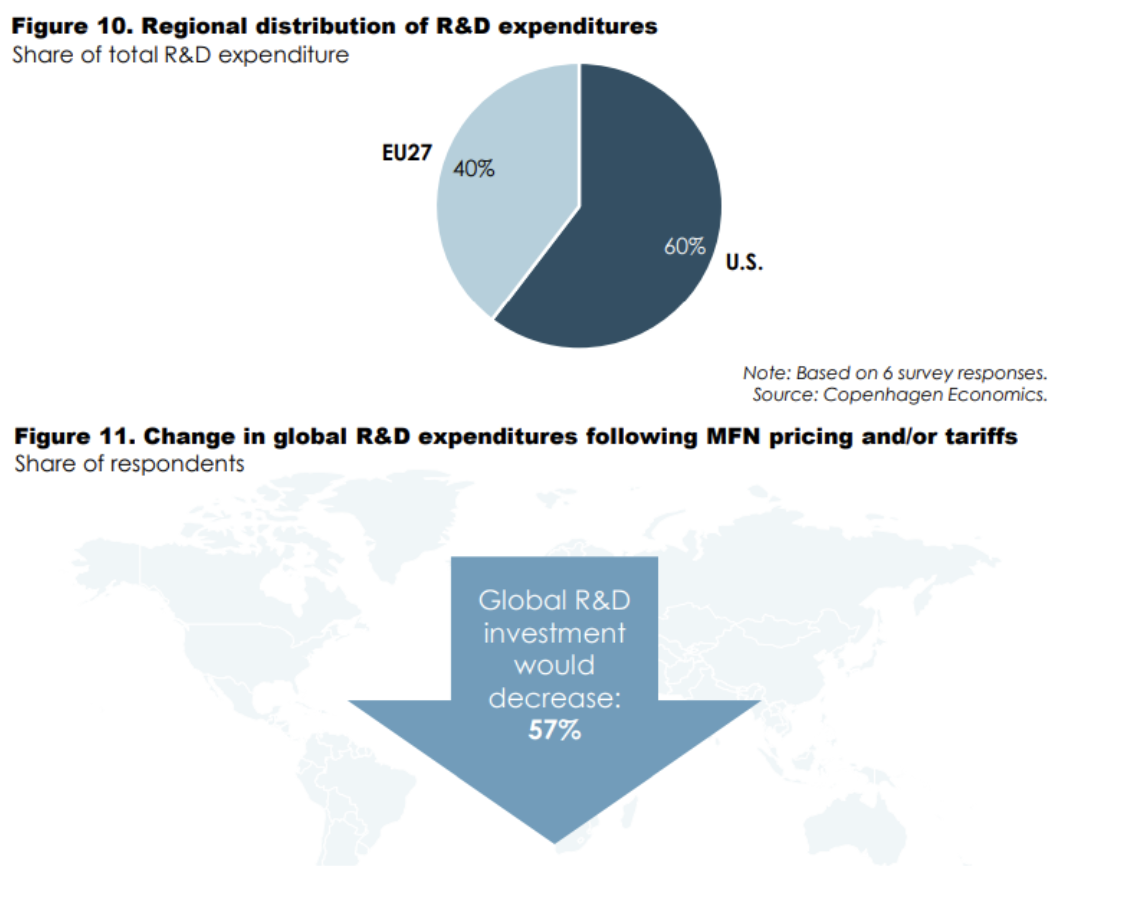
A new report by Copenhagen Economics, commissioned by the European Confederation of Pharmaceutical Entrepreneurs (EUCOPE), raises concerns about how proposed changes to US drug pricing policy could impact medicine availability and research investment in Europe.
The analysis is based on surveys of small and mid-sized biopharma companies, many of which warn that the introduction of “most favoured nation” pricing in the US, combined with potential tariffs on pharmaceuticals, would significantly alter their global launch and investment strategies. Rather than absorbing lower US prices, many companies say they would respond by increasing prices elsewhere, delaying or withdrawing launches in certain EU countries, or cutting back on global R&D spending altogether.
According to the survey, two-thirds of responding companies are considering delaying or cancelling product launches in parts of the EU within the next few years if the US measures go ahead. Over a longer horizon, that figure rises further. More than half also reported that they would reduce research spending if pricing reforms and tariffs were implemented without compensating policy changes in Europe.
The report argues that Europe risks becoming less attractive as a launch market, particularly for innovative medicines, unless regulatory, pricing, and reimbursement systems adapt more quickly. Fragmentation across national systems, lengthy timelines, and uncertainty around pricing are highlighted as key vulnerabilities.
While the findings reflect industry concerns, they raise broader questions for policymakers about how global pricing dynamics interact with patient access, innovation incentives, and long-term health system resilience. These dynamics are especially relevant for areas where development pipelines are already fragile and largely driven by smaller companies, including psychedelic therapies.
As the EU moves forward with new pharmaceutical rules and the Biotech Act, the report underlines the importance of creating a predictable environment that supports timely launches, sustained R&D investment, and equitable access across member states — even as global pricing pressures intensify.
