Big pharma is betting big on psychedelics. Will care keep up?
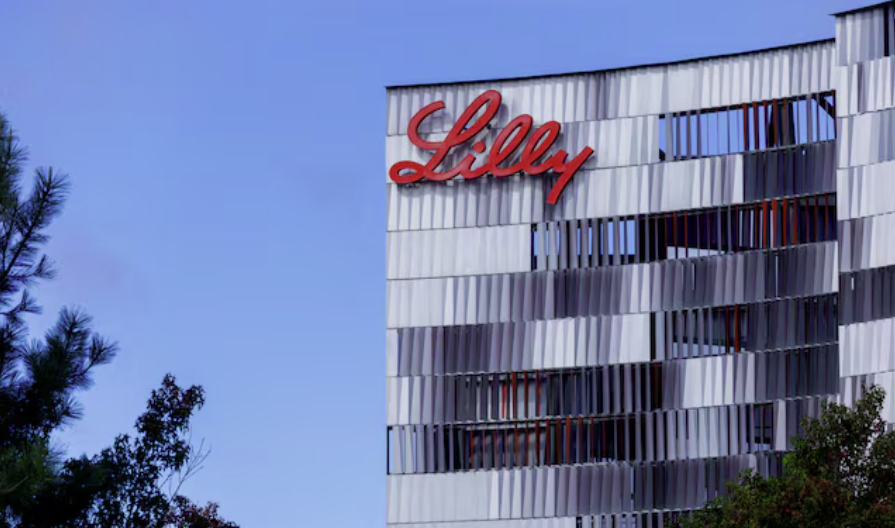
The Eli Lilly logo appears on one of the company’s offices in San Diego, California, U.S., November 21, 2025. REUTERS/Mike Blake/File Photo
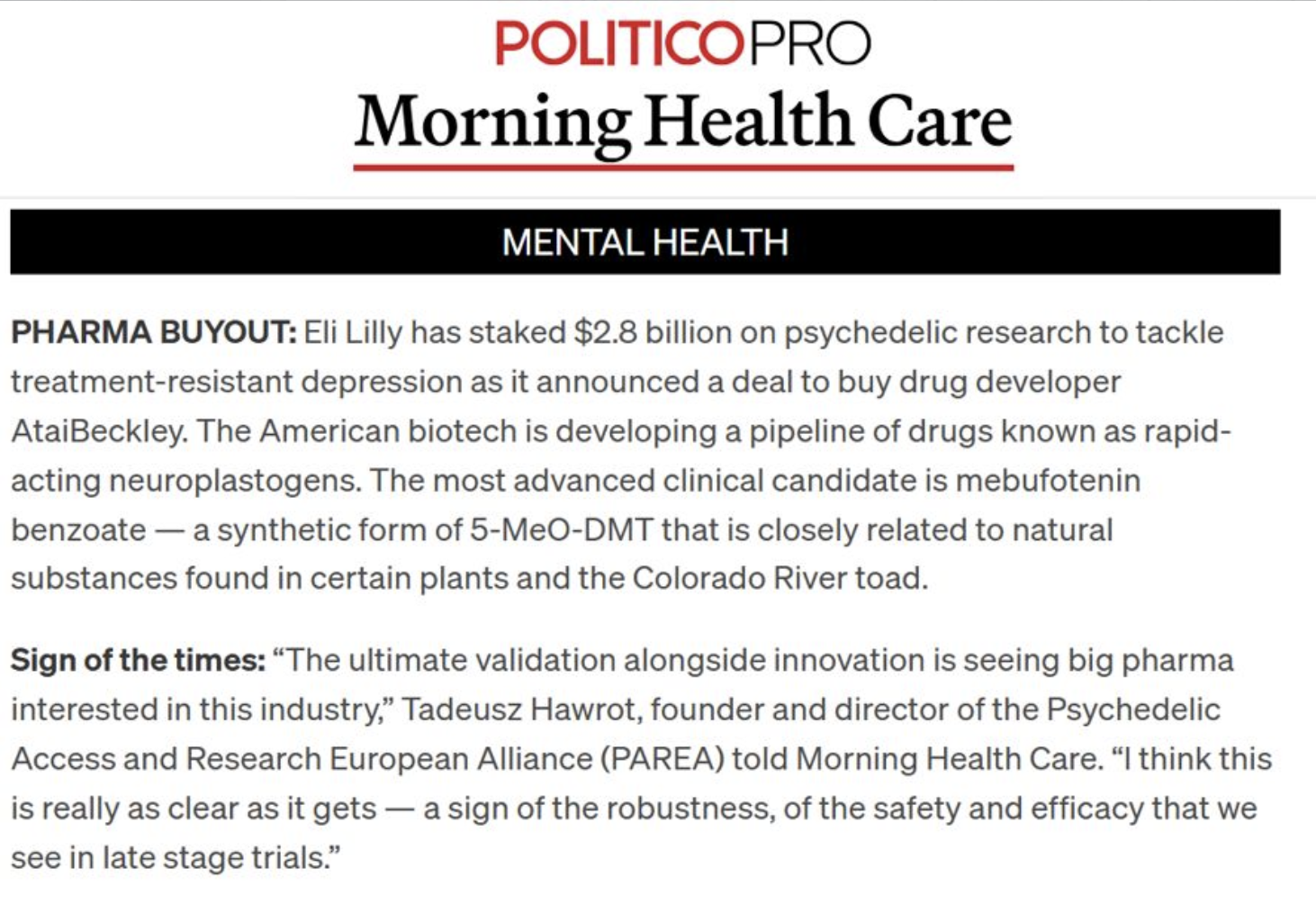
On July 16, news broke that Eli Lilly, the world's largest pharma company, acquired the psychedelic biotech AtaiBeckley in a multi-billion transaction. AtaiBeckley is developing an intranasal 5-MeO-DMT for treatment-resistant depression, which is just entering its Phase 3 trial.
POLITICO Europe covered this development this morning, quoting PAREA founder Tadeusz Hawrot, who called it the clearest indicator yet of the robustness, safety, and efficacy observed in late-stage psychedelic trials. Read the full piece here.
This marks the third major pharmaceutical company to venture into psychedelics, following Otsuka and Abbvie. J&J's Spravato is not included in this count, as they have largely attempted to reframe ketamine, a compound capable of producing profound altered states of consciousness, as another class of antidepressant. In their model of care, ketamine's psychedelic properties are viewed as a side effect to be suppressed, rather than a therapeutic opportunity.
However, it will be impossible to overlook the pronounced subjective effects of many other psychedelic compounds acquired by big pharma, such as the 5-MeO-DMT. For those unfamiliar with the effects of this compound, the WSJ just published a 15-minute video "The Race to Commercialize the World's Most Powerful Psychedelic," which vividly demonstrates its unparalleled potency.
PAREA genuinely welcomes the interest of big pharma in psychedelic therapy. Their involvement is critical for achieving widespread access to psychedelics through healthcare systems. However, there’s also concern about market forces that might attempt to constrain psychedelics into a narrow model of basic care, without proper preparation and post-dosing support.
At PAREA, we advocate for access to comprehensive care pathways, not just a drug. Psychedelic experiences can have profoundly psychologically destabilising effects, which presents a double-edged sword. While this can be part of their therapeutic properties, it may also cause harm if individuals are not adequately supported after the experience to process it and begin the hard work of translating insights into new, healthier habits. This also shifts the perception from these treatments being a passively received panacea towards being one vital component of a multifaceted and active effort towards recovery.
In addition, psychedelics open critical periods of brain plasticity, similar to those observed during early brain development when the brain is highly sensitive and malleable to its external environment. This can place individuals in a hyper-suggestible state, which extends beyond the dosing session and can last for many weeks afterwards. Most people need structured support and protection during this unique therapeutic window of both opportunity and liability.
This is why psychedelics will be most effective when integrated into a broader therapeutic framework that includes psychotherapy, peer support groups, and connecting individuals to local communities.
