New report: lessons from the first European Forum of National Psychedelic Societies
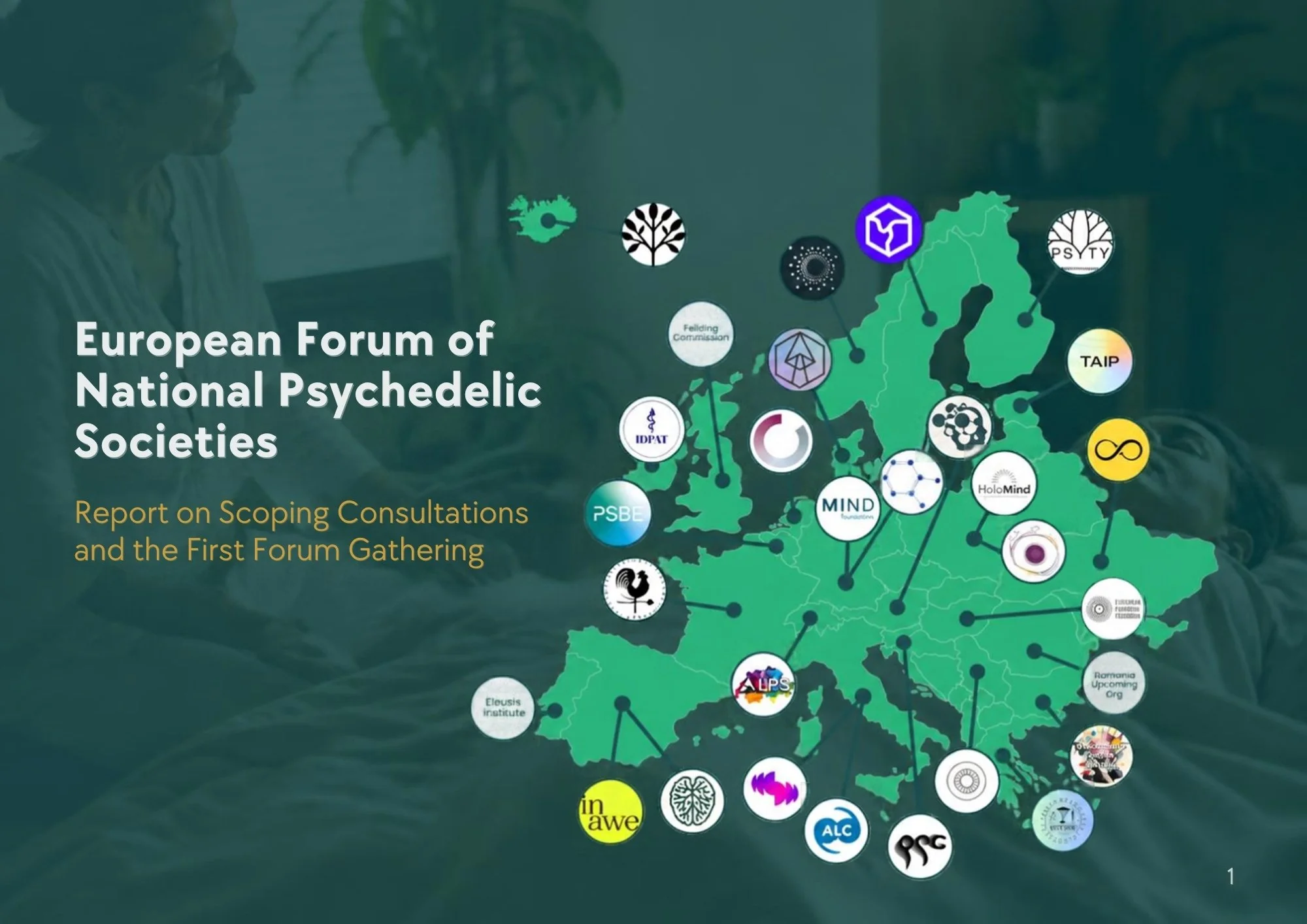
Our report on the first European Forum of National Psychedelic Societies is now available!
It brings together findings from consultations with psychedelic organisations across 25 European countries and the first European Forum of National Psychedelic Societies, held in Brussels on 7 May 2026.
The report examines national priorities, shared challenges and opportunities for collaboration. It captures practical lessons from the gathering, from regulatory pathways and treatment implementation to advocacy, professional training and organisational sustainability.
Connecting national experience with European policy
The Forum is a PAREA initiative designed to strengthen collaboration among national psychedelic organisations and connect their work with EU-level policy engagement. Its focus is the responsible development and integration of psychedelic therapies for mental health within existing legal and regulatory healthcare systems.
Ahead of the gathering, PAREA held individual meetings with representatives from each country to understand their activities, capacities and priorities. These conversations helped shape a programme around the issues participants most wanted to explore.
The consultations revealed substantial differences across Europe. Some organisations have established research networks, clinical partnerships and advocacy programmes. Others are building their first professional communities or working to enable psychedelic research. Many rely heavily on volunteers and face limited funding and capacity.
Despite these differences, organisations identified common needs: practical guidance on regulatory frameworks, stronger relationships with healthcare institutions, support for policy engagement and opportunities to learn from one another.
Learning from national approaches to access
The Forum examined several national approaches, including Germany’s compassionate use programme for psilocybin, Norway’s reimbursement of generic ketamine with psychotherapy for treatment-resistant depression, Switzerland’s limited medical use programme and legislative changes enabling medical psilocybin use in Czechia.
Participants explored how these experiences might inform work in their own countries. Discussions also covered emerging initiatives, including efforts to establish compassionate use programmes in Belgium and Italy, exploration of named-patient access in Austria, and Ukraine’s work to enable psychedelic research.
A recurring lesson was that establishing a legal or regulatory pathway does not resolve every barrier to treatment. Implementation also depends on reimbursement, trained professionals, suitable facilities, liability and insurance arrangements, and reliable access to pharmaceutical-grade substances.
Across the examples, scientific credibility, clinical partnerships and sustained engagement with relevant institutions emerged as important factors in progress.
Building advocacy capacity and sharing practical resources
Sessions explored how organisations can strengthen engagement with policymakers, healthcare professionals and the public. Spain shared lessons from organising a parliamentary event on psychedelic therapies, while PAREA presented resources to support national advocacy, including policy papers and contacts for MEPs and health attachés.
Practical information on how to obtain GMP-grade psychedelic substances, both for research and early access programmes was shared. Participants also discussed evidence generation, including the potential value of harmonising data collection across early access programmes and standardising adverse-event reporting.
The Forum’s Market of Ideas highlighted projects that could be adapted elsewhere. Examples included Estonia’s scholarships for professional training, Austria’s survey of healthcare professionals’ perceptions, Switzerland’s support for independent student associations and collaboration among Nordic organisations.
These exchanges showed how sharing existing tools and experience could reduce duplication and help organisations develop achievable projects.
Continuing the collaboration
Participant feedback strongly supported continuing the Forum. Priorities for future collaboration included further learning on legal and regulatory frameworks, organisational funding and sustainability, shared repositories of useful materials, and regular opportunities for peer exchange.
Lastly, there was an agreement to rename the initiative the European Forum of Psychedelic Organisations to better reflect the range of scientific societies, foundations, research networks and civil society groups involved. We are already starting to plan the next Forum in 2027!
We thank all participating organisations for contributing their knowledge and experience.
