
Events
PAREA Events:
All Upcoming Events
European Forum of National Psychedelic Societies
European Forum of National Psychedelic Societies
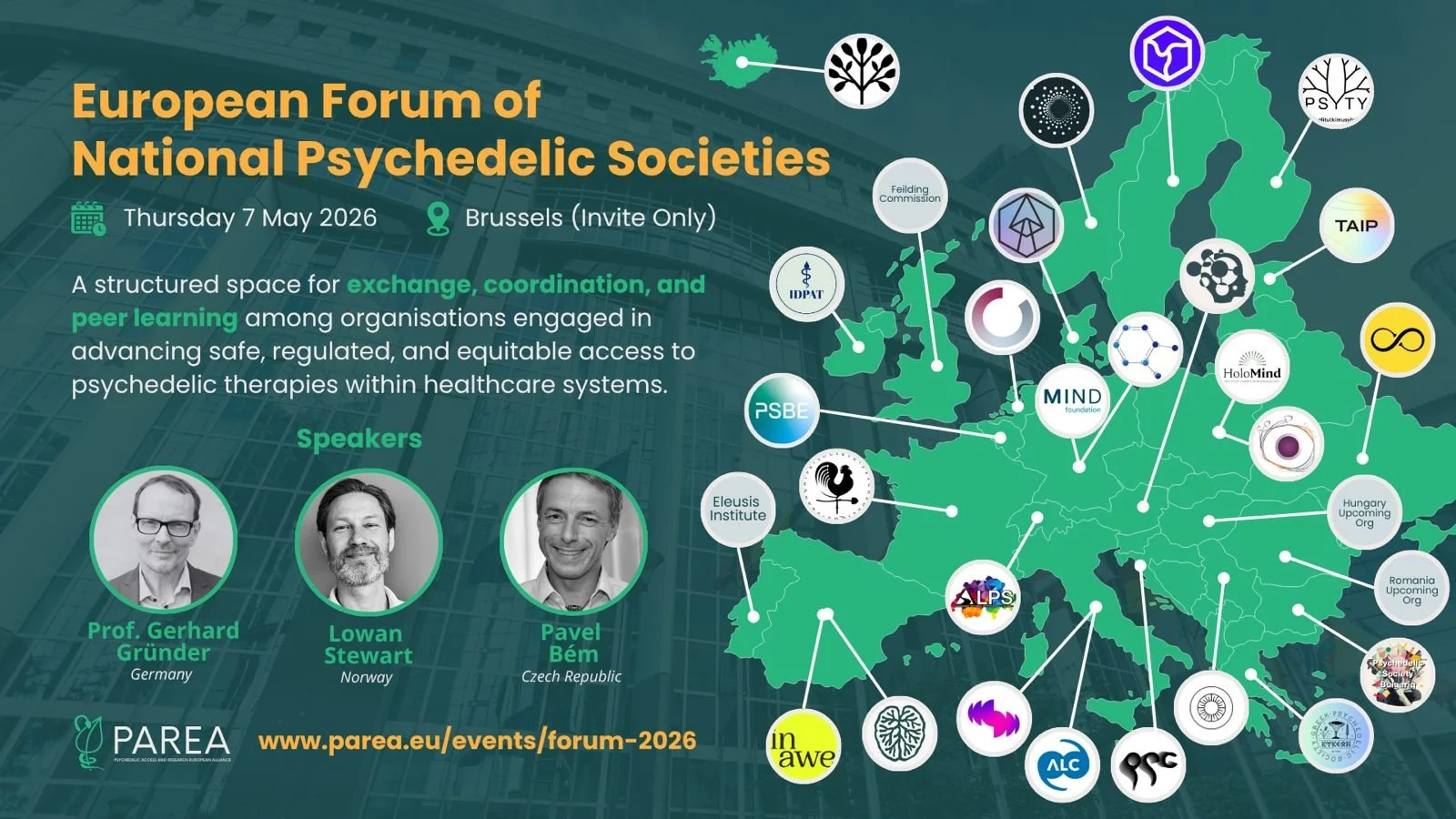
The European Forum of National Psychedelic Societies is a closed, invitation-only meeting convened by PAREA in Brussels, bringing together representatives of organisations from 25 countries working on psychedelic research, policy, and access across Europe.
The Forum aims to create a structured space for exchange, coordination, and peer learning among organisations engaged in advancing safe, regulated, and equitable access to psychedelic therapies within healthcare systems.
Focus of the meeting
The Forum will focus on two core dimensions.
The first is access. This includes early access pathways, compassionate use, rescheduling, and emerging regulatory developments across European countries.
The second is implementation and engagement. This includes advocacy strategies, working with policymakers and regulators, coalition-building, and strengthening national-level capacity to support future access.
The programme is designed to move beyond general discussions and focus on practical experience, lessons learned, and approaches that can be adapted across different national contexts.
Participation
This is a closed, invitation-only meeting bringing together a curated group of organisations aligned with PAREA’s focus on medical access through healthcare systems.
The Forum is not open for public registration.
Countries and organisations represented
The Forum brings together leaders representing organisations from 24 countries across Europe, reflecting a broad and diverse landscape of national initiatives.
Participating countries and organisations include:
Austria – Association for Psychedelic Science & Therapy Austria (APSTA)
Belgium – Psychedelic Society Belgium (PSBE)
Bulgaria – Psychedelic Society Bulgaria
Croatia – Psychedelic Research Society Croatia
Denmark – Danish Center for Psychedelic Education (CEPDA)
Estonia – Foundation for Therapeutic Advancement and Innovation with Psychedelics (SA TAIP)
Finland – Finnish Association for Psychedelic Research
France – French Psychedelic Society (Société Psychédélique Française / SPF)
Germany – German Society for Psychedelic Research and Therapy (DGPFT); MIND Foundation
Greece – Greek Psychedelic Society (Kykeon)
Hungary – Upcoming Hungarian organisation
Iceland – Icelandic Psychedelic Society - Hugvikandi
Ireland – Irish Doctors for Psychedelic Assisted Therapy (IDPAT)
Italy – Italian Society for Psychedelic Medicine (SIMEPSI); Luca Coscioni Association
Netherlands – OPEN Foundation
Norway – Norwegian Association for Psychedelic Science (NPV)
Poland – Polish Psychedelic Society; HoloMind Foundation
Portugal – Eleusis Institute
Romania – Upcoming Romanian organisation
Serbia – National Association for Psychedelic Research
Spain – inawe Foundation / Spanish Society for Psychedelic Medicine (SEMPSi)
Sweden – Swedish Network of Psychedelic Science
Switzerland – Awareness Lectures on Psychedelic Science (ALPS)
Ukraine – Ukrainian Psychedelic Research Association (UPRA)
United Kingdom – Feilding Commission
Guest speakers
The Forum will feature contributions from leading experts and practitioners who have been directly involved in advancing access and regulatory developments in Europe.
Prof. Gerhard Gründer (Germany)
Professor of Psychiatry and leading expert in neuropsychopharmacology, involved in advancing clinical research and compassionate use with psychedelic therapies in Germany.Lowan Stewart (Norway)
Clinician and key architect behind the nationwide reimbursement of ketamine treatment in Norway, with direct experience in implementing access within public healthcare systems.Pavel Bém (Czech Republic)
Physician and policy leader who has played a central role in recent rescheduling and psilocybin policy developments in the Czech Republic
Context
The Forum builds on PAREA’s ongoing work at the European level to support policy development, research, and access to psychedelic therapies, as well as its engagement with national organisations through the Community Supporters network.
It also lays the groundwork for longer-term collaboration, with the aim of strengthening coordination across countries and supporting the development of practical pathways to access in Europe.
May 6: Register now! Psychedelic research and access in Ukraine—policy discussion at the European Parliament and online
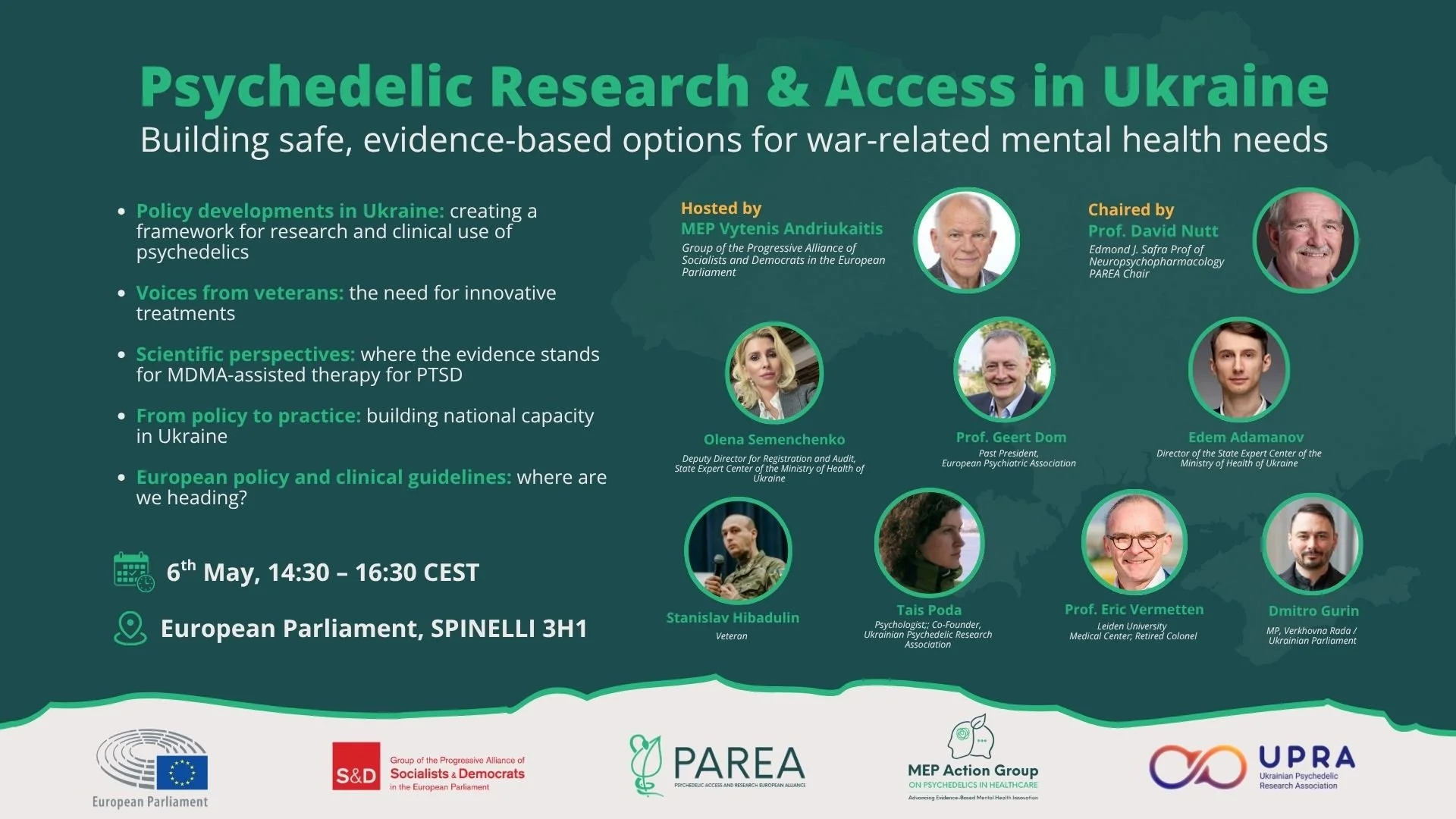
Co-organised by PAREA, the MEP Action Group on Psychedelics in Healthcare, and the Ukrainian Psychedelic Research Association (UPRA), and hosted by S&D MEP Vytenis Andriukaitis, the event will explore how evidence-based psychedelic therapies may contribute to addressing war-related mental health challenges in Ukraine, particularly PTSD among veterans.
The programme features perspectives from Ukrainian stakeholders, including veteran lived experience and a member of the Ukrainian Parliament, on the mental health burden of war and system-level needs. Following presentations will address European policy and clinical guidelines, as well as the latest evidence on MDMA-assisted therapy for PTSD and its implementation in real-world settings. We will also cover regulatory and clinical research considerations for controlled substances in mental health, with contributions from representatives of Ukraine’s State Expert Center of the Ministry of Health. The event will conclude with a panel discussion focused on aligning Ukrainian developments with European clinical and regulatory frameworks.
📅 6 May 2026 | 🕒 14:30 – 16:30
📍 European Parliament, Brussels & online (note: in-person attendance is closed)
We hope you will be able to join us for these important discussions.
Access the registration form here and view the full event agenda here!
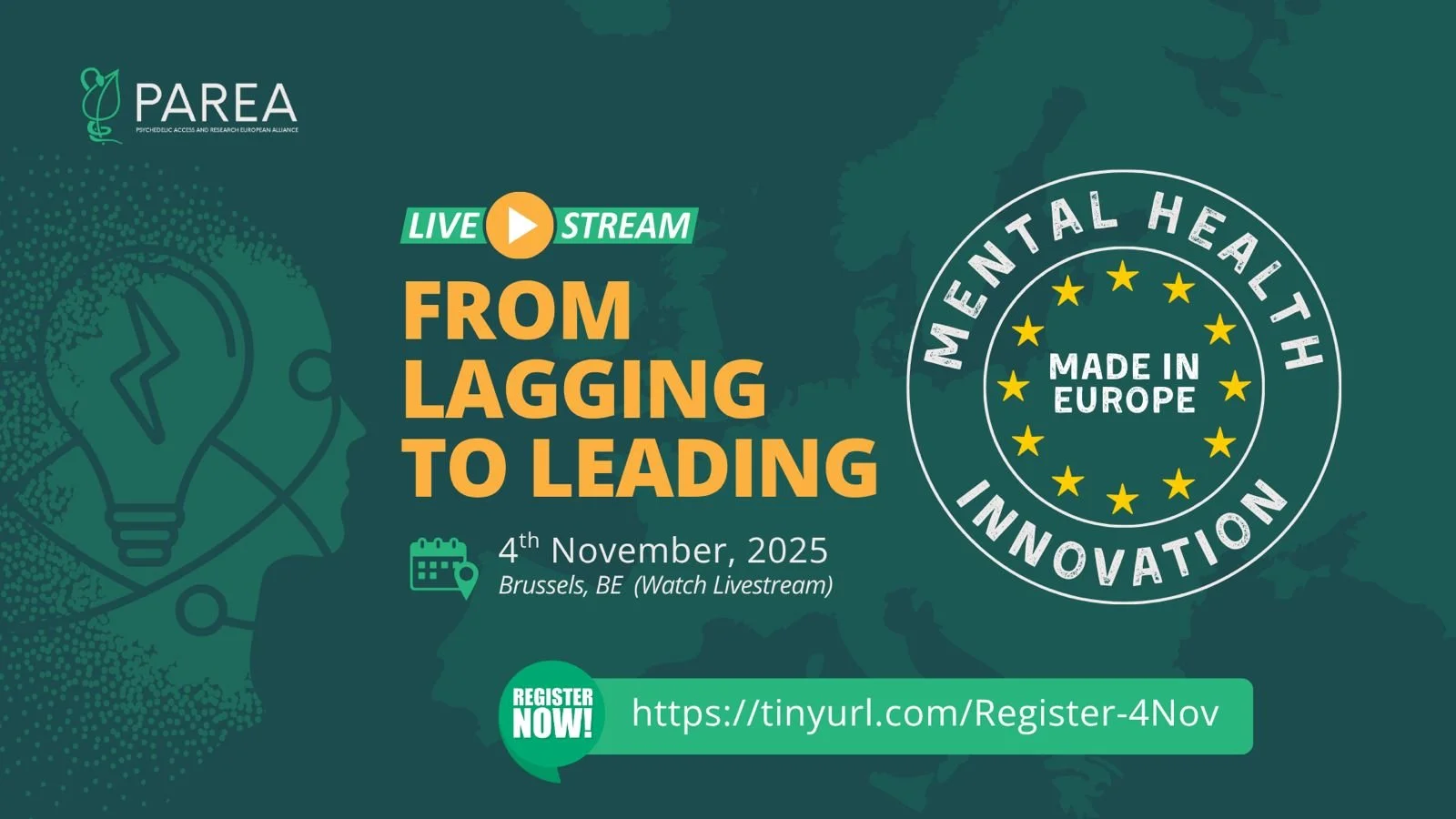
From Lagging to Leading: Mental Health Innovation “Made in Europe”
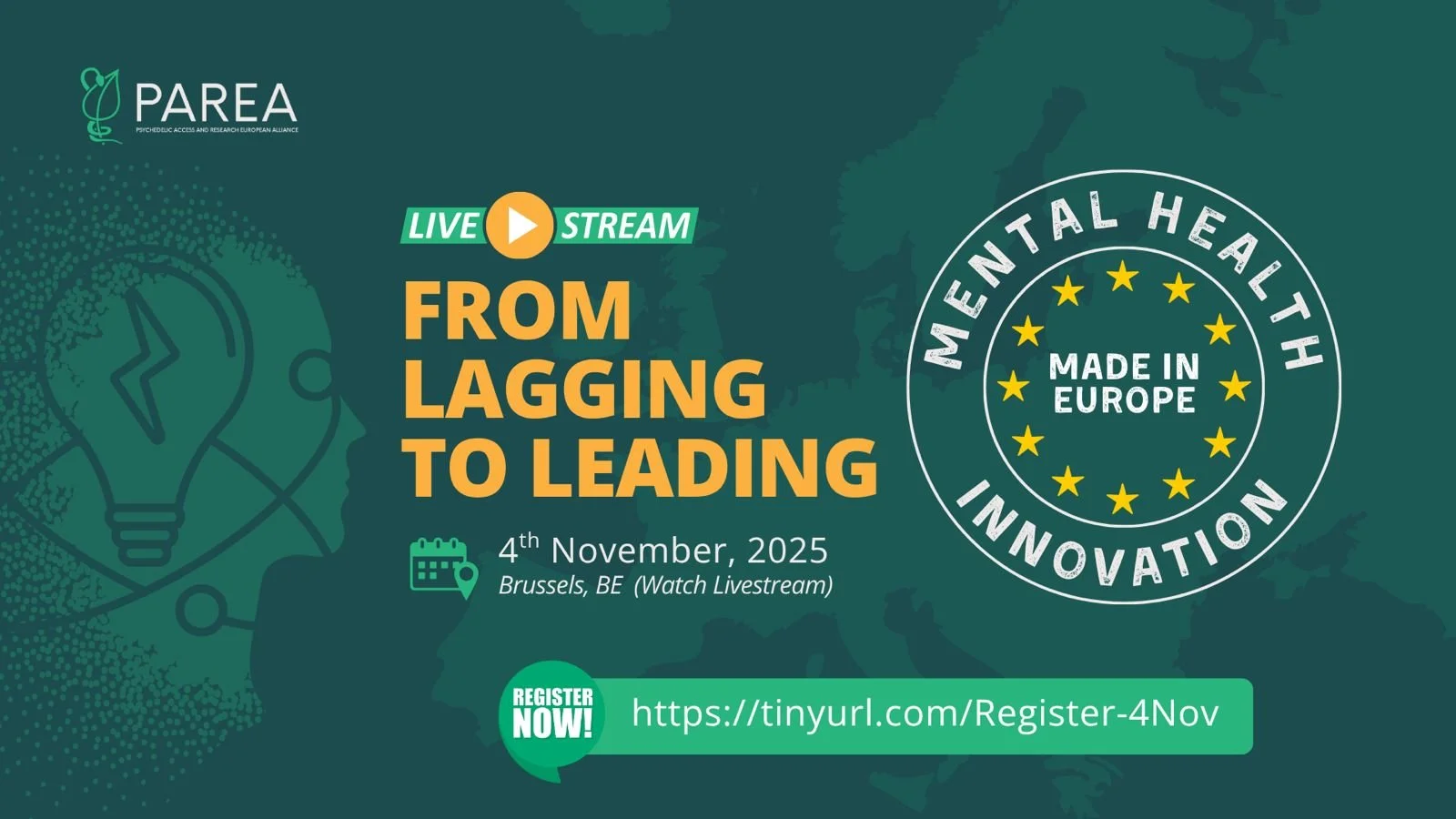
Europe is at a crossroads. Mental health conditions now cause more years of ill-health than cancer, diabetes, and cardiovascular disease combined, yet psychiatric innovation has stagnated, leaving patients dependent on treatments first developed half a century ago. This neglect is not only a public health failure but also a competitiveness challenge, as Europe falls behind the US and China in life sciences investment and clinical innovation. This event will explore how Europe can move from leading to lagging in mental health innovation.
With the right policies, Europe can close the innovation gap and ensure that patients gain timely access to new treatments. A mental health “moonshot” and a coordinated EU Mental Health Strategy should mobilise funding, set ambitious goals, and provide long-term direction. Stronger incentives for high-risk and cross-sector research are needed to unlock breakthroughs where market forces alone have failed. The modernisation of regulatory frameworks must ensure that innovative combination therapies can be properly evaluated. And greater investment in infrastructure and workforce capacity is essential so that health systems are ready to deliver the next generation of treatments.
The use of novel tools such as regulatory sandboxes, to be introduced in the EU pharma reform, can enhance the responsible translation of science into care. By allowing controlled, real-world testing of innovative treatments, sandboxes can both generate crucial evidence for regulators and payers and provide safe, early access for patients. Psychedelic therapies, now in late-stage development, provide an ideal test case for how sandboxes can help bridge the gap between clinical trials and health system integration.
By taking decisive action, Europe can elevate mental health as a driver of innovation and competitiveness and turn today’s crisis into tomorrow’s success story.